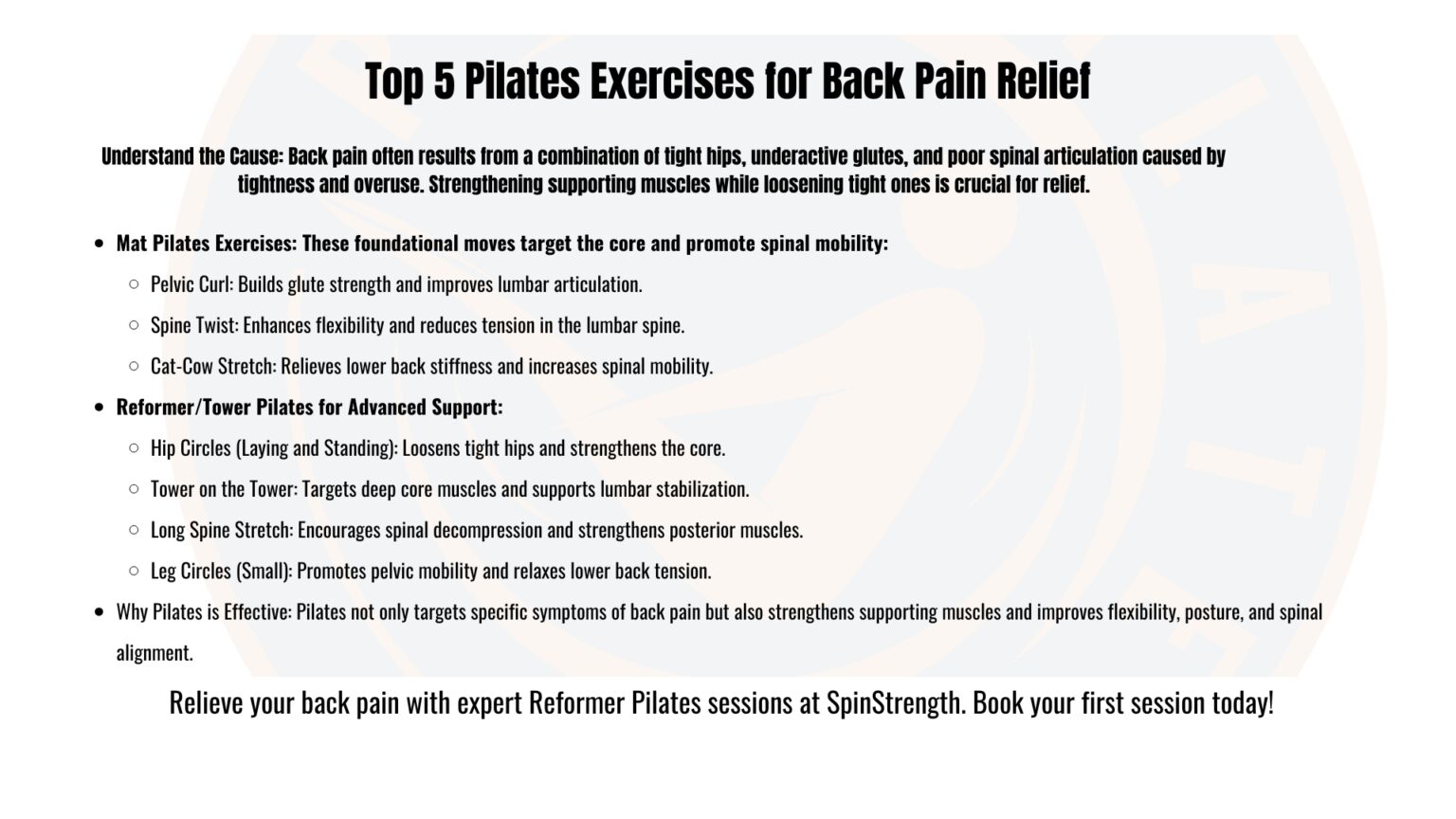
Back pain isn’t just a single condition—it’s a combination of symptoms often caused by tightness, overuse, and muscular imbalances. According to Dr. Chris Raynor, a prominent orthopedic surgeon and sports medicine specialist, many cases of back pain stem from tight hips, underactive glutes, and poor spinal articulation. This means the solution often lies in strengthening the supporting muscles while stretching and releasing tight areas.
Pilates, particularly Reformer-based exercises, addresses these issues by targeting core strength, improving flexibility, and enhancing spinal alignment. This is why Reformer Reformer Pilates San Jose is increasingly being used in physical therapy and rehabilitation settings.
Let’s explore the top 5 Pilates exercises that can help relieve back pain, divided into Mat and Reformer categories.
1. Mat Pilates for Back Pain Relief
Mat exercises are an accessible way to begin addressing back pain. These exercises focus on controlled movements and muscle engagement to relieve tension and improve strength.
Pelvic Curl
This exercise strengthens the glutes, engages the core, and promotes spinal articulation. It’s ideal for addressing stiffness in the lower back.
- How to Perform: Lie on your back, knees bent, feet flat on the mat. Slowly roll your pelvis up, lifting each vertebra off the mat until your hips are elevated. Reverse the motion to lower back down.
- Why It Works: Improves mobility in the lumbar spine and strengthens the posterior chain.
Spine Twist
Targeting the lumbar region, the spine twist improves flexibility and helps release tension.
- How to Perform: Sit tall with legs extended. Rotate your torso to one side, keeping your hips steady. Return to center and repeat on the other side.
- Why It Works: Enhances rotation and releases tightness in the lower back.
Cat-Cow Stretch
This stretch alternates between flexion and extension of the spine, promoting mobility and reducing tension.
- How to Perform: Start on hands and knees. Arch your back (cow pose), then round it upwards (cat pose). Repeat slowly.
- Why It Works: Increases spinal flexibility and reduces stiffness.
2. Reformer Pilates for Back Pain Relief
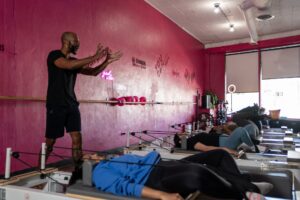
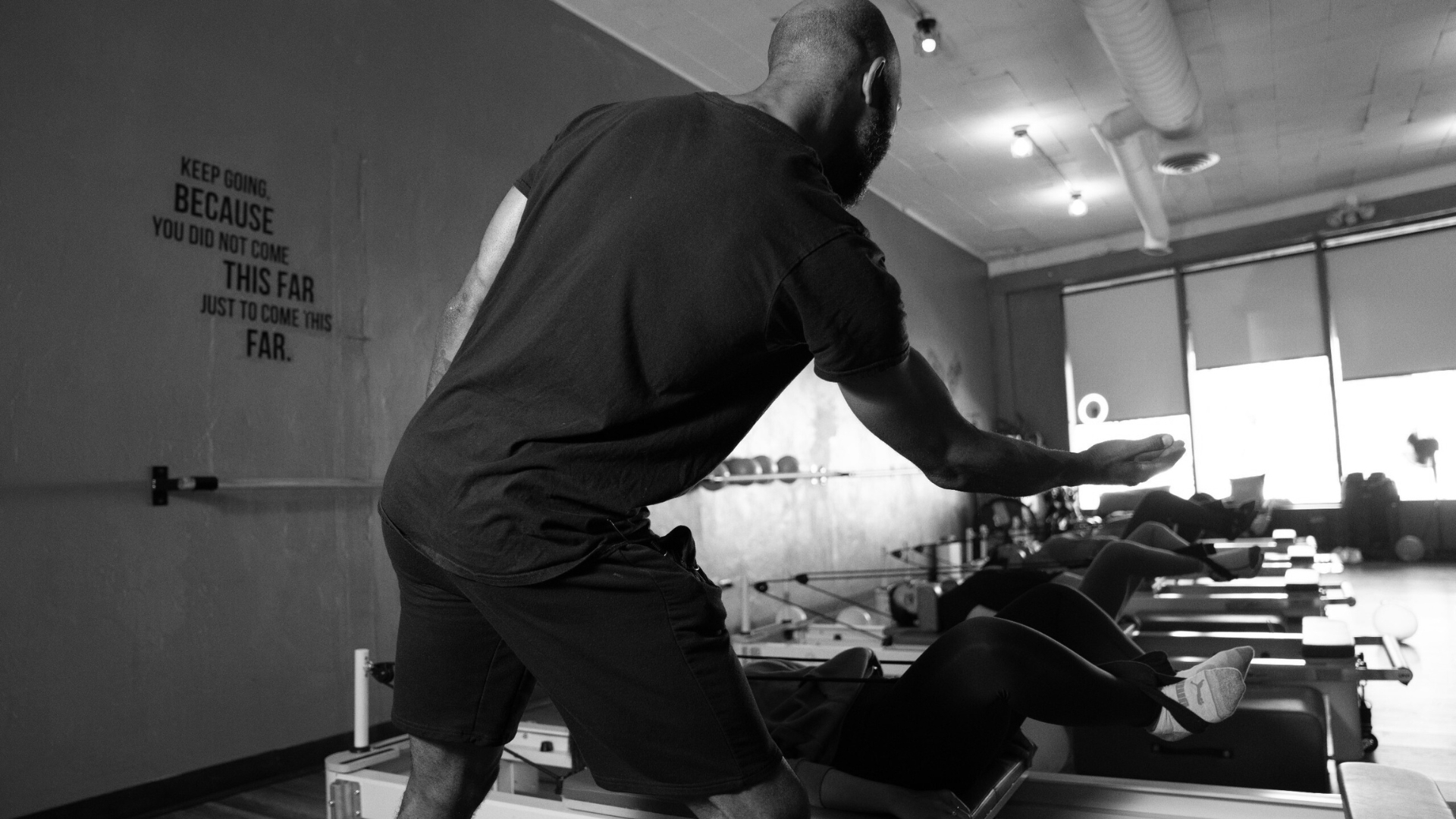
Reformer exercises allow for greater support and resistance, making them especially effective for addressing specific areas of tightness and weakness.
Hip Circles (Tower)
This exercise reduces tension in the hips and lower back while improving flexibility.
- How to Perform: Lie on the Reformer with feet in straps. Move your legs in controlled circular motions.
- Why It Works: Loosens tight hip flexors and relieves lower back tension.
Tower on the Tower
A challenging core exercise that also stabilizes the lumbar spine.
- How to Perform: With feet pressing into the tower bar, roll your spine up and down in a controlled manner.
- Why It Works: Builds strength in the core while promoting spinal stability.
Long Spine Stretch
This Reformer exercise decompresses the spine and strengthens the posterior chain.
- How to Perform: Lying on the carriage with feet in straps, lift your hips and extend your legs upward, then lower back down.
- Why It Works: Stretches the spine and enhances posterior chain strength.
Leg Circles (Small)
This simple movement improves pelvic mobility and reduces tension in the lower back.
- How to Perform: Lie on the Reformer, feet in straps, and make small circular movements with your legs.
- Why It Works: Enhances hip and pelvic mobility while reducing tightness in the lumbar area.
Why Pilates Works for Back Pain
Pilates is uniquely effective for back pain because it strengthens weak muscles, stretches tight areas, and improves posture. Regular practice can reduce symptoms by:
- Promoting core stability.
- Enhancing flexibility in the hips and spine.
- Encouraging proper alignment.
Reformer Pilates, in particular, is a low-impact and customizable form of exercise that supports safe and effective rehabilitation.
Benefits of Pilates in San Jose
| Exercise Name | Targeted Area | How It Helps | Tips for Success |
|---|---|---|---|
| Pelvic Tilt (Mat Pilates) | Lower Back, Core | Helps mobilize the lumbar spine and strengthen the core to reduce strain on the back. | Keep movements small and controlled; engage the abs throughout. |
| Cat-Cow Stretch (Mat Pilates) | Spine, Shoulders, Hips | Improves spinal flexibility and releases tension in the lumbar region. | Synchronize breathing with movement for maximum benefit. |
| Bridging (Mat Pilates) | Glutes, Hamstrings | Strengthens underactive glutes and stretches tight hip flexors, reducing pressure on the lower back. | Avoid overarching the back; press evenly through the feet. |
| Hip Circles (Reformer Tower) | Hips, Core, Lower Back | Improves hip mobility, stretches tight hamstrings, and strengthens supporting muscles. | Keep movements fluid and focus on controlled rotations. |
| Long Spine (Reformer) | Core, Hamstrings, Spine | Enhances spinal articulation and strengthens the posterior chain for better back support. | Move slowly to maintain control and avoid jerky motions. |
| Tower on the Tower (Reformer) | Core, Upper Back, Hips | Builds upper back strength and improves hip stability, alleviating strain on the lumbar spine. | Engage the core throughout; don’t rush through the movement. |
| Leg Circles (Reformer) | Hips, Core, Lumbar Spine | Encourages hip mobility and lumbar stability while strengthening the pelvic floor. | Keep the pelvis stable; start with smaller circles and gradually increase the size. |
In Closing...
Back pain is often the result of tight muscles, underuse, and poor movement patterns. Pilates, particularly Reformer-based exercises, provides a holistic solution by strengthening weak areas, improving flexibility, and promoting proper alignment. Whether you’re dealing with lower back stiffness or chronic discomfort, these top 5 exercises can help you find relief.
If you’re ready to experience the benefits of Reformer Pilates, book a session at SpinStrength today. Let us help you strengthen, stretch, and align your way to a pain-free life.
FAQ Section
Pilates strengthens the core, improves flexibility, and enhances spinal alignment, addressing many root causes of back pain like tight muscles and poor posture.
Both forms are beneficial, but Reformer Pilates offers added support and resistance, making it particularly effective for rehabilitation and strengthening.
Most people notice improvements within 4–6 weeks of consistent practice, with 2–3 sessions per week.
Yes, Pilates builds long-term strength and flexibility, reducing the likelihood of recurring back pain when practiced regularly.
If your back pain is severe or undiagnosed, it’s important to consult a healthcare provider to ensure Pilates is safe for your condition.
Related Posts